AI in Enterprise
Key TakeawaysTable Of Content
Scaling AI Across Your Organisation: A Step-by-Step Guide
Key Takeaways

Many organisations never go far beyond launching small-scale AI pilots. To gain the real AI benefits, you’ll need to deploy it across the entire company.
A comprehensive enterprise AI strategy enables you to make smarter business decisions quickly, boost efficiency and scale personalisation for a large number of customers.
To implement AI in an enterprise, you need technology and tools that can process large amounts of high-quality data securely at an accelerated pace.
Adopting AI for enterprise is about reimagining how your whole company operates, from connecting dots and breaking down silos to using insights from data at every level. The early adopters have already shown how effective AI can uplift business operations. According to Gartner, enterprise AI spending will surpass $3.3 trillion by 2029. At this point, the real milestone that actually separates the innovators from the pack is getting your AI pilot to production.
Let’s understand what exactly AI is in the enterprise and how you can turn your test pilots into a company-wide transformation.
What is AI in Enterprise
Enterprise AI is deploying tech like machine learning, natural language processing, and image recognition to address the complex challenges of your organisation.
For instance, after reading thousands of support tickets, emails, and chat logs, AI can understand recurring issues and help you auto-route tickets to the right team or suggest instant solutions. Or, it can analyse data from historical incidents and predict system outages, performance bottlenecks, or SLA breaches before they even happen.
Contrary to common belief, AI in enterprise isn’t just about creating a chatbot or automating a few tasks. It’s about integrating intelligence into your everyday business processes to improve the outcome across different departments, streamline operations, empower employees, and anticipate market changes ahead of time.
In practice, it means optimising supply chains, preventing fraudulent activities, demand forecasting, dynamic pricing optimisation, risk and compliance monitoring, and more.
The Business Value of Enterprise AI and Its Challenges
A comprehensive enterprise AI strategy delivers benefits that go far beyond simple efficiency improvements, resources, and cost optimisation. They include:
Of course, roadblocks are part of the journey. Recognising them early is how you lay the foundation for a successful enterprise AI implementation roadmap.
How to Implement AI in Enterprise: Launching the Pilot
To successfully implement AI in an enterprise, you need technology that can process large amounts of high-quality data securely at an accelerated pace. It’s typically challenging for most organisations, which is why companies prefer to partner with AI experts to carry out these processes. Here’s how you can do it:
1
Identify Your Business Objectives and Goals
Start by articulating the precise business challenges you want to address with AI. Whether your focus is on reducing churn, enhancing efficiency or another tangible outcome, defining your KPIs. Having a clear understanding of these factors helps you shape your AI strategy the right way.
2
Assess and Prepare Data Infrastructure
In this step, you audit your existing data systems, quality, and accessibility. For AI to work properly, you need high-quality data pipelines, training, and governance processes. These are foundational to creating a robust AI strategy.
3
Create a Development Plan
Just like any other project, you need to have a development plan for your AI implementation. This plan will include all technical and business aspects of your project. Start by defining:
Besides that, make sure that your plan is scalable and flexible enough so you can include any changes in it as you go.
4
Launching Your Pilot Project
Launching an AI pilot helps you to test your project in a controlled environment. Use this period to identify any issues and gather relevant data that might arise when you scale it for wider adoption across the enterprise.
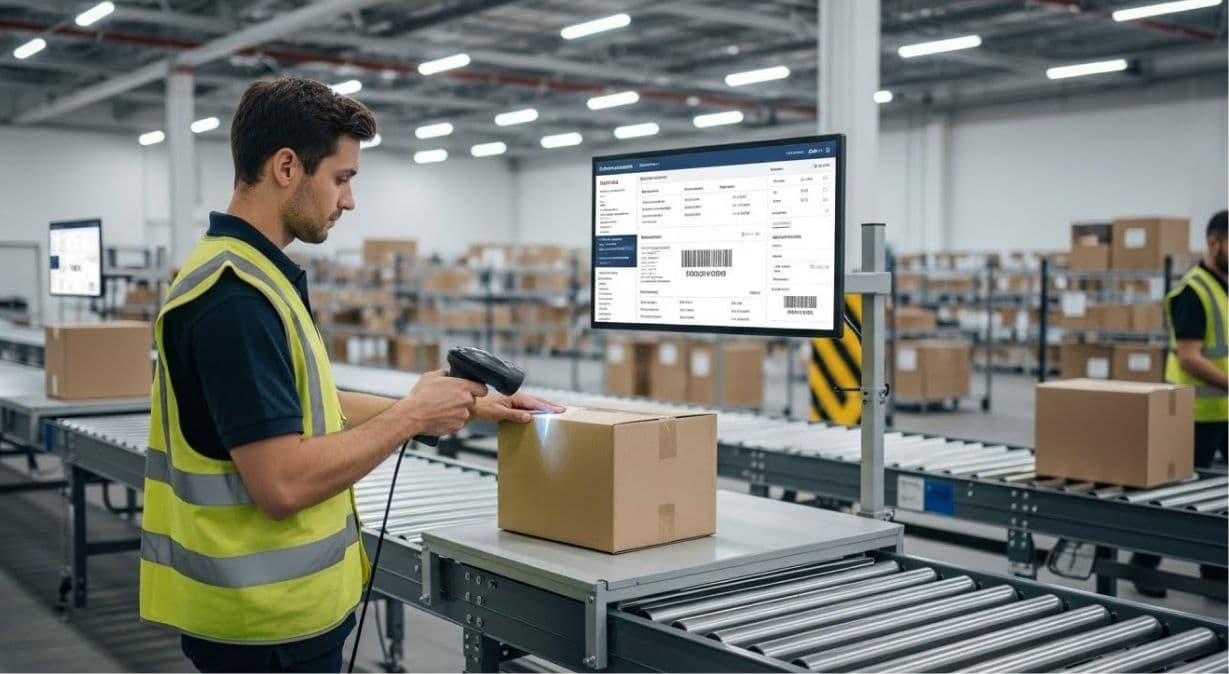
Why Some Enterprises Fail to Scale Their AI
Scaling AI means taking your AI pilot and putting it into production that runs at scale with monitoring and reporting features. It requires long-term commitment along with a budgeted financial investment, equipment, high computing power, and the tendency of your organisation to adopt new technology.
Looking ahead, you may initially face some potential challenges in these areas. Here’s how you can navigate them:
How to Scale AI in Your Business
Scaling AI means you need to move beyond pilot programs and start using ML (Machine Learning) and AI algorithms to run your everyday business tasks at scale and speed.
However, it will require a strong infrastructure, large and reliable data sets, and well-integrated data to deliver accurate and useful outcomes. Plus, you’ll also need talent with deep domain knowledge that can interpret AI outputs and act on them the right way.
In practice, it means:
To achieve early success, choose high-impact, achievable use cases and form cross-functional AI teams. Most importantly, make sure that you have strong governance, compliance, and end-to-end monitoring so that your AI systems remain ethical, reliable, and valuable as they grow.
FAQ Section
1
How do we build a realistic roadmap to scale enterprise pilot projects?
2
What should we change in our organisation to become an AI-first enterprise?
3
Are there frameworks to help govern enterprise AI?
4
What sort of metrics can really prove AI’s business value?
5
Which tools or platforms can help deploy models for everyday operations?
Key TakeawaysTable Of Content
Privacy Policy Terms & Conditions
© 2026 Entermind. Harnessing data to build human experiences that grow businesses.

We value your privacy.
Our website uses cookies to offer you a tailored experience. By clicking "Accept All", you consent to our use of cookies. Learn more about our Privacy Policy
Accept AllDecline